Doctor of Physical Therapy
DPT
Program Overview
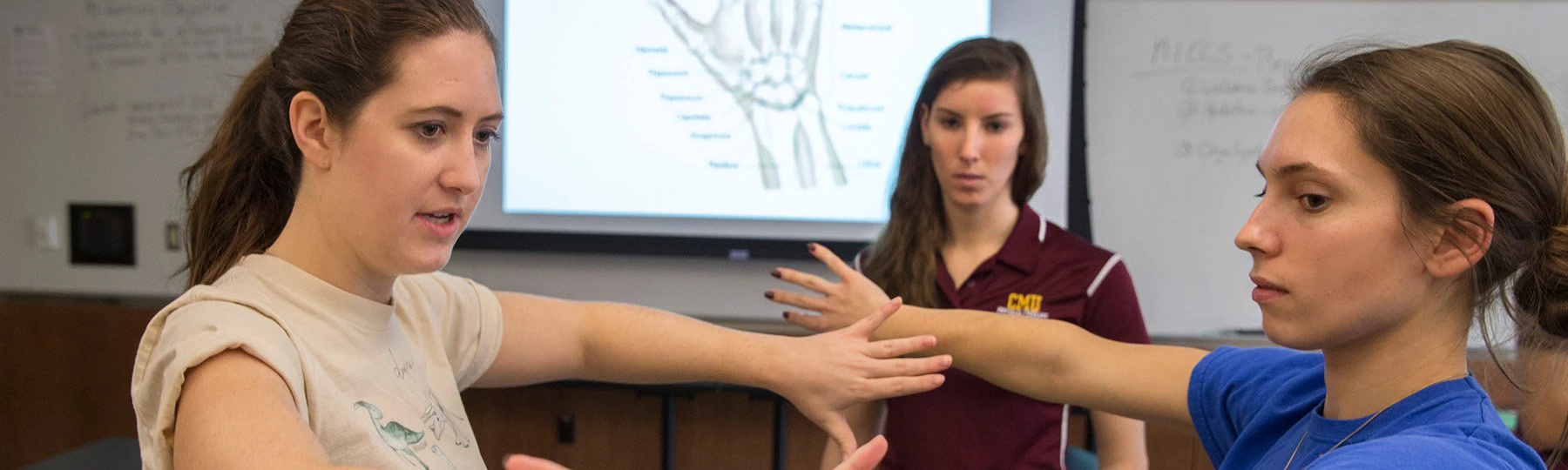
If you're looking for a physical therapy program with the multiple dimensions of patient care at the center of instruction, our Doctor of Physical Therapy degree is ideal for you. Our program promotes integrated clinical experiences during your first two years, a full academic year of clinical experiences, and a team of clinical coordinators to support your learning. You'll also gain access to cutting-edge physical therapy technologies and the latest innovations.
Program Snapshot
Why This Program & What You'll Learn
Our Doctor of Physical Therapy (DPT) program is nationally recognized for developing highly trained professionals. Our graduates have the knowledge and skills to help optimize movement, health, and well-being with patients. You'll become a more educated, skillful, reflective, and ethical physical therapist. Immerse yourself in sound clinical reasoning to assist patients with injury treatment and rehabilitation, as well as the prevention of future injuries.
Our DPT program embraces accountability, caring and compassion, social responsibility, and other core values of the physical therapy profession. The curriculum follows a case-oriented educational model that places the multiple dimensions of patient care at the center of our instruction. You'll examine clinical cases that arise in the physical therapy practice with different patient populations such as pediatrics and geriatrics.
Best of all, you'll have the chance to conduct research alongside faculty members and use advanced technology in the Motion Analysis Center and the Human Performance Laboratory. You'll have two options to satisfy the research component of the curriculum:
- Work on a collaborative research project with the guidance and supervision of a faculty member.
- Complete a clinical case report working with the guidance and supervision of either the director of clinical education or one of the regional coordinators during the final clinical rotation year.
This program is also offered at our satellite campus in Houghton, Michigan.
Program Highlights
With the DPT program, you'll:
- Learn and work alongside dedicated instructors and researchers in our unique clinical education model of integrated clinical experiences, a full academic year of clinical, and the use of a team of clinical coordinators.
- Have access to best-in-class CMU facilities — the Human Performance Laboratory, the Motion Analysis Center, the new PT Labs, and the Interprofessional Education and Practice Center.
- Gain expertise and skills to confidently start your career path with access to more than 300 affiliated clinical agencies in a variety of practice settings in Michigan, the Midwest, and the United States.
- Have the ability to travel internationally to learn how Physical Therapy is conducted across the world.
Careers & Outcomes
Physical therapists have the opportunity to practice their skills in a variety of other health care settings. From private practice to long-term care, and beyond.
More than 95% of our graduates have full-time jobs upon graduation from the program.
| Career | Projected Salary |
|---|---|
| Physical Therapist |
$97,720
|
Request Information about CMU
By submitting this form, I agree to receive calls, emails and/or text messages from Central Michigan University to discuss furthering my education.